
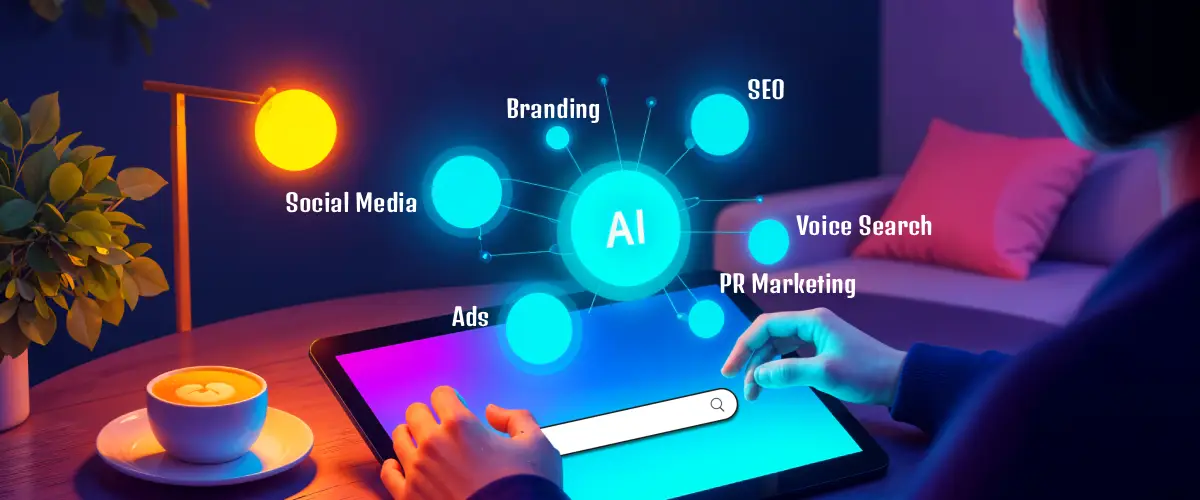
Artificial Intelligence (AI) is no longer a future concept in digital marketing; it is already shaping how brands plan, execute, and measure their marketing efforts. In 2026, AI has become a powerful tool that helps businesses understand customers better, work more efficiently, and deliver more personalized experiences.
Let’s explore the key AI trends in digital marketing that brands should focus on.

AI-Powered Customer Insights
AI helps marketers analyze large amounts of data quickly and accurately. This allows brands to understand customer behavior, preferences, and buying patterns in real time.
With AI-driven insights, marketers can:
• Predict customer needs
• Identify trends faster
• Create data-backed strategies
Better insights lead to smarter marketing decisions.

Personalization Is No Longer Optional
One of the biggest advantages of AI is personalization. AI tools help brands deliver customized content and offers to thousands of users at the same time.
AI supports personalization through:
• Personalized emails
• Product recommendations
• Dynamic website content
• Targeted ads
Personalized experiences improve engagement and build stronger customer relationships.

AI in Content Creation and Optimization
AI is increasingly used to support content marketing. From generating ideas to optimizing headlines, AI helps marketers create content faster and more effectively.
AI tools assist with:
• Blog and social media content ideas
• SEO optimization
• Content performance analysis
While human creativity is still essential, AI makes the process more efficient.

Chatbots and Conversational Marketing
AI-powered chatbots are now a common part of customer communication. They provide instant responses and support 24/7.
Chatbots help with:
• Answering customer queries
• Lead generation
• Booking appointments
• Improving customer experience
They reduce response time and increase customer satisfaction.

Smarter Ad Targeting and Campaign Optimization
AI plays a major role in digital advertising. It helps optimize ads by analyzing performance data and user behavior.
AI improves advertising by:
• Identifying the right audience
• Optimizing ad creatives
• Adjusting budgets automatically
• Improving ROI
This makes paid campaigns more efficient and cost-effective.

Voice Search and Visual Search Optimization
AI is driving the growth of voice and visual search. More users are searching through voice assistants and image-based searches.
Marketers should focus on:
• Conversational keywords
• Voice-friendly content
• Image optimization
This helps brands stay visible in modern search results.

Ethical AI and Data Privacy
As AI use grows, data privacy becomes more important. Brands must use AI responsibly and transparently.
Key focus areas include:
• Ethical data usage
• Customer consent
• Secure data handling
Responsible AI use builds trust and protects brand reputation.

Strategies Brands Should Look After
To use AI effectively, brands should:
• Combine AI tools with human creativity
• Focus on customer experience
• Invest in quality data
• Stay updated with AI trends
• Follow ethical and privacy guidelines
Conclusion
AI is transforming digital marketing by making it smarter, faster, and more customer-focused. Brands that understand AI trends and apply the right strategies will gain a strong competitive advantage.
The key is not to replace humans with AI, but to use AI as a support system to create better marketing experiences.